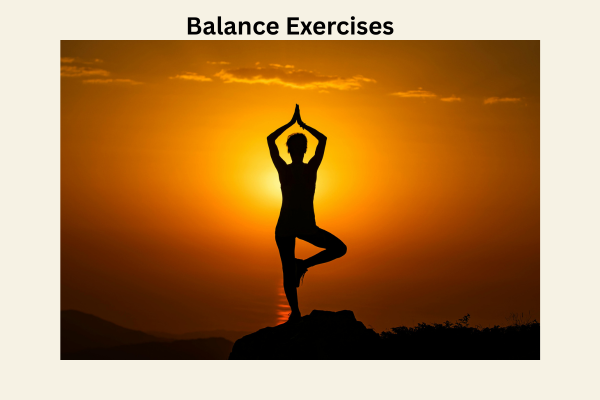
Balance exercises are one of the most important yet often overlooked parts of a healthy fitness routine. Whether you are young, middle-aged, or older, improving your balance can help you move confidently, reduce the risk of injury, and maintain independence in daily life.
In this comprehensive guide, you’ll learn everything you need to know about balance exercises, including their benefits, how to get started, and simple routines you can practice at home.
Why Balance Exercises Are Important?
Balance exercises help your body maintain stability and control during movement and while standing still. Good balance is essential for everyday activities like walking, climbing stairs, bending, or even standing for long periods.
As we age, our balance naturally declines due to muscle loss, reduced coordination, and slower reflexes. This is why balance exercises are especially important for older adults.
Key Benefits of Balance Exercises:
- Reduce the risk of falls and injuries
- Improve coordination and posture
- Strengthen core and stabilizing muscles
- Enhance mobility and flexibility
- Boost confidence in daily movements
- Support independence as you age
Even if you’re not older, incorporating exercises into your routine can improve athletic performance and overall body control.
How to Get Started with Balance Exercises:
Starting this balancing exercises doesn’t require special equipment or a gym membership. You can do most exercises at home with minimal space.
Simple Tips Before You Begin:
- Wear comfortable clothing
- Choose a safe, clutter-free area
- Keep a sturdy object nearby for support
- Start slow and progress gradually
- Focus on proper form rather than speed
If you have a medical condition or serious balance issues, consult a healthcare professional before beginning exercises.
Balance Exercises: Standing on One Foot
One of the simplest and most effective exercises is standing on one foot.
How to Do It:
- Stand with your feet hip-width apart
- Keep your hands on your hips or at your sides
- Lift one foot off the ground
- Hold the position for up to 30 seconds
- Switch to the other leg
Tips:
- Use a wall or chair for support if needed
- Keep your posture upright
- Focus your gaze on a fixed point
Progression:
- Close your eyes for added challenge
- Stand on a soft surface like a pillow
Balance Exercises: Weight Shifting
Weight shifting helps your body learn how to distribute weight evenly and improves control.
How to Do It:
- Stand with feet hip-width apart
- Shift your weight onto your right foot
- Lift your left foot slightly off the ground
- Hold for up to 30 seconds
- Return to center and switch sides
Benefits:
- Improves coordination
- Strengthens leg muscles
Builds stability
Balance Exercises: Heel-to-Toe Walk
This exercise improves walking stability and coordination.
How to Do It:
- Stand upright
- Place one foot directly in front of the other
- Walk in a straight line, heel touching toe
- Take 10–15 steps forward
Tips:
- Use a wall for support if needed
Move slowly and steadily
Balance Exercises: Sit-to-Stand
This exercise strengthens your lower body and improves balance during everyday movements.
How to Do It:
- Sit on a sturdy chair
- Cross your arms over your chest
- Stand up slowly without using your hands
- Sit back down with control
Benefits:
- Builds leg strength
- Improves functional movement
- Enhances stability
Balance Exercises: Single-Leg Reach
This exercise improves coordination and flexibility.
How to Do It:
- Stand on one leg
- Extend the other leg forward, sideways, or backward
- Reach as far as possible without losing balance
- Return to starting position
Progression:
- Perform multiple directions in one set
- Increase reach distance over time
Balance Exercises: Bicep Curls with Balance
Adding weights increases the challenge and engages your core.
How to Do It:
- Hold a dumbbell in one hand
- Stand on the opposite leg
- Perform slow bicep curls
- Maintain balance throughout
Benefits:
- Combines strength and stability
- Improves coordination
- Engages core muscles
Balance Exercises Using Unstable Surfaces:
Using unstable surfaces makes exercises more effective.
Examples:
- Standing on a pillow
- Using a balance pad
- Practicing on a soft mat
Why It Works:
Unstable surfaces force your body to engage more muscles to maintain balance.
Balance Exercises for Older Adults:
This exercises are especially important for older adults, as they help prevent falls and maintain independence.
Safe Balance Exercises for Seniors:
- Standing on one foot with support
- Walking heel-to-toe
- Gentle weight shifting
- Chair sit-to-stand exercises
Safety Tips:
- Always have support nearby
- Avoid sudden movements
- Practice regularly but gently
How to Combine Walking with Balance Exercises:
- Walk on uneven surfaces (carefully)
- Practice heel-to-toe walking
- Add pauses to stand on one foot
Balance Exercises and Core Strength:
Your core plays a major role in maintaining balance. Strong core muscles help stabilize your body during movement.
Core-Focused Exercises:
- Standing knee lifts
- Plank variations
- Single-leg holds
Strengthening your core enhances the effectiveness of all exercises.
Balance Exercises: Tai Chi for Stability
Tai chi is a gentle form of movement that improves balance and coordination.
Benefits of Tai Chi:
- Improves stability
- Reduces fall risk
- Enhances body awareness
- Promotes relaxation
It is especially beneficial for beginners and older adults.
How Often Should You Do Balance Exercises?
For best results, include this exercises in your routine regularly.
Recommended Frequency
- Beginners: 2–3 times per week
- Intermediate: 3–5 times per week
- Advanced: Daily practice
Even a few minutes each day can make a big difference.
Common Mistakes to Avoid in Balance Exercises:
Avoid these common mistakes to get the most out of your exercises:
- Rushing through movements
- Not using support when needed
- Ignoring proper posture
- Skipping warm-ups
- Overtraining
Focus on control, not speed.
Creating a Simple Exercise Routine:
Here’s a quick routine you can follow:
Beginner Routine:
- Standing on one foot – 2 sets (each leg)
- Weight shifting – 10 reps each side
- Heel-to-toe walk – 2 rounds
- Sit-to-stand – 10 reps
Intermediate Routine:
- Single-leg balance – 30 seconds each side
- Single-leg reach – 10 reps
- Bicep curls with balance – 10 reps
- Heel-to-toe walk – 3 rounds
Final Thoughts:
This exercises are essential for maintaining stability, preventing falls, and improving overall physical health. They are simple, effective, and can be done almost anywhere.
Whether you’re just starting out or looking to improve your fitness routine, adding balance exercises can make a big difference in how you move and feel every day.
Start small, stay consistent, and gradually challenge yourself. Over time, you’ll notice improved confidence, better coordination, and stronger overall balance.
By making balance exercises a regular part of your routine, you are investing in a safer, healthier, and more active future.
FAQs:
1. What are balance exercises?
Balance exercises are physical activities designed to improve your stability and coordination. These exercises help you control your body position whether you are standing still or moving, reducing the risk of falls.
2. How often should I do balance exercises?
For best results, exercises should be done at least 2–3 times per week. However, practicing them daily—even for a few minutes—can significantly improve your stability and strength over time.
3. Are balance exercises safe for seniors?
Yes, balance exercises are very beneficial for seniors. They help prevent falls, improve mobility, and maintain independence. It’s recommended to start with simple exercises and use support if needed.
4. Can balance exercises improve posture?
Yes, balance exercises strengthen your core and stabilizing muscles, which play a key role in maintaining good posture. Regular practice can help you stand and move more confidently.
5. Do I need equipment for balance exercises?
No, most balancing exercises can be done without any equipment. However, you can use simple items like a chair for support or a pillow to increase difficulty as your balance improves.