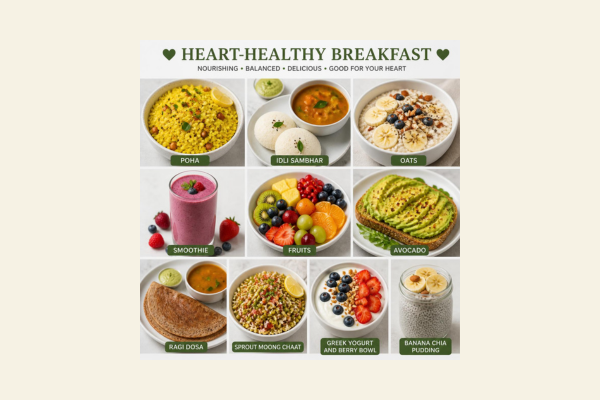
Heart-Healthy Breakfast: Start Your Day the Right Way
A heart-healthy breakfast can be a simple and delicious way to support your overall cardiovascular health. The first meal of the day gives you an opportunity to include fibre-rich grains, fruits, vegetables, plant-based proteins, nuts and healthy fats in your diet.
For many people in India, breakfast is more than a quick meal. It can be a filling and enjoyable part of the day, with popular choices such as idli, dosa, poha, upma, paratha and vada. However, the way these foods are prepared can make a major difference to their nutritional value.
A breakfast cooked with excess oil, butter, ghee, salt or refined flour may be less suitable for people trying to manage cholesterol, blood pressure or overall heart health. Fortunately, you do not have to give up Indian flavours to enjoy a heart-healthy breakfast.
With a few simple changes, traditional foods can become nutritious, satisfying and heart-friendly.
Why Is a Heart-Healthy Breakfast Important?
A balanced breakfast can help you start the day with important nutrients such as fibre, protein, vitamins, minerals and healthy fats. People who regularly eat nutritious breakfasts may also have better overall diet quality.
Rather than focusing on breakfast as a single “most important” meal, it is better to think of it as one opportunity to build a healthy eating pattern throughout the day.
A good heart-healthy breakfast can include:
- Whole grains such as oats, dalia and millets
- Fibre-rich fruits and vegetables
- Beans, lentils and other plant proteins
- Low-fat or unsweetened dairy products
- Nuts and seeds in sensible portions
- Healthy unsaturated fats
- Minimal added salt and sugar
The goal is not to make breakfast complicated. In fact, some of the best heart-healthy breakfast choices can be prepared in just a few minutes.
What Makes a Breakfast Heart-Healthy?
When choosing a heart-healthy breakfast, pay attention to the overall combination of ingredients rather than one particular food.
1. Choose More Fibre
Fibre is an important part of a heart-friendly eating pattern. Oats, barley, whole grains, vegetables, fruits, beans and seeds can help increase your daily fibre intake.
Soluble fibre, found in foods such as oats and barley, is particularly useful as part of a diet designed to support healthy cholesterol levels.
2. Limit Saturated Fat
Large amounts of butter, ghee, cream and high-fat dairy products can increase saturated fat intake. For a healthier breakfast, use these ingredients sparingly and choose foods containing unsaturated fats, such as nuts and seeds.
3. Watch Your Sodium Intake
Too much sodium can contribute to high blood pressure in salt-sensitive people. A heart-healthy breakfast should therefore avoid excessive salt.
Be especially careful with salty pickles, packaged chutneys, processed foods and heavily salted snacks.
4. Include Protein
Protein can make breakfast more satisfying. Dal, beans, sprouts, besan, low-fat yogurt, eggs and nuts can all contribute protein.
5. Add Fruits and Vegetables
Fruits and vegetables provide fibre, potassium and a wide variety of vitamins and beneficial plant compounds. Adding vegetables to an Indian breakfast is one of the easiest ways to make it more nutritious.
15 Easy Heart-Healthy Breakfast Ideas:
Here are simple breakfast ideas that can fit into a balanced, heart-conscious eating pattern.
1. Oats Vegetable Upma:
Oats vegetable upma is an excellent heart-healthy breakfast for busy mornings.
Use rolled or quick-cooking oats with vegetables such as carrots, beans, peas and onions. Add mustard seeds, curry leaves, ginger and other spices for flavour instead of relying on excess salt or oil.
Why it is heart-friendly:
- Oats provide soluble fibre.
- Vegetables increase fibre and micronutrients.
- It can be prepared with very little oil.
- It is easy to customise with different vegetables.
For an even more filling meal, serve it with plain low-fat curd.
2. Ragi Dosa:
Ragi, also known as finger millet, can be a nutritious alternative to refined-grain breakfast foods.
A heart-healthy breakfast of ragi dosa can provide fibre and minerals while giving you the familiar taste and texture of a South Indian favourite.
Prepare the dosa using a small amount of oil and serve it with fresh vegetable chutney or a low-salt sambar.
Avoid making the dosa excessively oily if you are trying to reduce your overall fat intake.
3. Besan Chilla:
Besan chilla is one of the easiest high-protein Indian breakfast options.
Mix gram flour with chopped onions, tomatoes, coriander, spinach and green chilli. Cook the chilla on a non-stick pan using a small amount of oil.
This heart-healthy breakfast provides plant-based protein and can also contribute fibre when vegetables are added.
Pair it with plain yogurt or homemade coriander chutney with little salt.
4. Vegetable Poha:
Poha is a quick and versatile Indian breakfast. Flattened rice can be combined with peas, carrots, onions, coriander and other vegetables.
To make poha more heart-friendly, control the amount of oil and salt and add plenty of vegetables.
You can also add a small quantity of peanuts for healthy fats and extra texture.
5. Vegetable Dalia:
Broken wheat, or dalia, is a simple whole-grain option for breakfast.
Cook dalia with vegetables such as carrots, beans, peas and bottle gourd. Add cumin, turmeric, ginger and herbs for flavour.
This warm and satisfying heart-healthy breakfast can provide complex carbohydrates and fibre without requiring much oil.
6. Idli With Vegetable Sambar:
Idli is steamed rather than fried, making it a naturally light breakfast choice.
Traditional idli is made using rice and urad dal. Serve it with vegetable-rich sambar to add protein, fibre and vegetables to the meal.
Instead of consuming large quantities of salty coconut chutney, use a modest serving and keep the overall sodium content in mind.
7. Sprouted Moong Chaat:
Sprouted moong can make a refreshing and protein-rich heart-healthy breakfast.
Combine sprouts with cucumber, tomato, onion, coriander and lemon juice. Add spices such as roasted cumin and black pepper for flavour.
Keep added salt modest.
This breakfast is especially useful when you want something light but filling.
8. Overnight Oats With Fruit:
Overnight oats are ideal for people who do not have much time in the morning.
Combine oats with unsweetened milk or low-fat yogurt and leave them in the refrigerator overnight. In the morning, add berries, apple, banana, chia seeds or a few chopped walnuts.
Avoid adding large amounts of sugar, honey or sweetened syrups.
9. Greek Yogurt and Berry Bowl:
A bowl of plain low-fat Greek yogurt or skyr with berries, oats, chia seeds and a few nuts can be a balanced heart-healthy breakfast.
Yogurt provides protein, while berries contribute fibre and beneficial plant compounds. Chia, flax and walnuts provide unsaturated fats.
Choose unsweetened yogurt whenever possible and control portions of calorie-dense nuts and seeds.
10. Steel-Cut Oatmeal With Berries and Walnuts:
Oatmeal is a classic choice for a heart-conscious breakfast.
Cook steel-cut or rolled oats with water or low-fat milk. Add cinnamon, berries and a small amount of walnuts.
This combination provides fibre, complex carbohydrates and healthy fats.
For sweetness, rely primarily on fruit rather than adding several spoonfuls of sugar.
11. Banana Chia Pudding:
Chia seeds absorb liquid and create a creamy pudding-like texture.
Mix chia seeds with unsweetened milk and mashed banana, then refrigerate overnight. In the morning, add a few slices of fresh fruit.
This convenient heart-healthy breakfast provides fibre and plant-based fats.
12. Brain-Healthy Fruit Smoothie:
A homemade smoothie can be a convenient breakfast when prepared with nutritious ingredients.
Blend banana, blueberries or other seasonal fruit with spinach, unsweetened soy milk and plain yogurt. You can add a small amount of chia, flax or hemp seeds.
Avoid turning a smoothie into a dessert by adding sugar, flavoured syrups or large amounts of sweetened yogurt.
13. High-Protein Raspberry and Peanut Butter Chia Pudding:
For a more protein-rich breakfast, combine chia pudding with plain yogurt and raspberries.
A small amount of natural peanut butter can add flavour and healthy fats.
Choose peanut butter without added sugar and excessive salt.
This is a useful make-ahead heart-healthy breakfast for busy weekdays.
14. Green Smoothie:
A green smoothie does not have to taste like vegetables.
Blend spinach with banana, mango, pineapple and unsweetened milk or yogurt. The fruit adds natural sweetness while spinach contributes fibre and micronutrients.
For better balance, include a protein source such as plain yogurt or unsweetened soy milk.
15. Beans, Whole Grains and Egg:
A breakfast inspired by beans and grains can provide a satisfying combination of fibre and protein.
Use cooked beans with a whole grain such as barley or brown rice and add vegetables. A boiled or poached egg can provide additional protein.
If you enjoy eggs, they can fit into a balanced diet for many people. However, individual dietary needs differ, particularly for people with certain cholesterol or cardiovascular conditions.
Traditional Indian Breakfasts: What Should You Change?
You do not necessarily need to eliminate traditional Indian breakfast foods to make your diet more heart-friendly.
The key is how often you eat them, how much you eat and how they are prepared.
Instead of deep-fried vada, try:
- Steamed idli
- Besan chilla
- Vegetable oats upma
- Sprouted moong chaat
Instead of oily poori, try:
- Ragi dosa
- Vegetable dalia
- Whole-grain roti with vegetables
- Vegetable poha
Instead of heavily buttered or ghee-rich foods, try:
- Small amounts of unsaturated vegetable oils
- Nuts and seeds
- Avocado where available
- Plain low-fat yogurt
Instead of refined flour, choose:
- Whole wheat
- Oats
- Barley
- Dalia
- Ragi and other millets
These swaps can make a familiar Indian breakfast more compatible with a heart-conscious eating pattern.
Heart-Healthy Breakfast Changes You Can Make Today:
Small changes can have a meaningful impact when they become regular habits.
Replace white bread with whole-grain bread.
Whole-grain options generally provide more fibre than refined bread.
Choose oats instead of sugary cereal.
Choose plain oats and add fruit, cinnamon and nuts for flavour.
Opt for lower-fat dairy instead of full-fat options when appropriate.
Plain low-fat curd or yogurt can provide protein without as much saturated fat.
Reduce salt and use herbs and spices instead.
Use ginger, garlic, cumin, coriander, turmeric, curry leaves, lemon and black pepper to make food flavourful.
Choose steaming, roasting or pan-cooking instead of deep frying.
Cooking methods matter. Steaming idli or lightly pan-cooking chilla can reduce the amount of added fat compared with deep frying.
Easy Tips to Make Your Heart-Healthy Breakfast Routine:
A nutritious breakfast does not need to take an hour to prepare.
Plan Ahead
Prepare overnight oats, chopped vegetables, sprouts or dosa batter in advance.
Keep Healthy Ingredients Available
Keep oats, dalia, fruits, vegetables, plain yogurt, nuts and seeds readily available.
Reduce Added Salt
Taste your food before adding more salt. Homemade meals also make it easier to control sodium compared with many packaged foods.
Use Oil Carefully
Even healthier oils contain calories, so use them in moderate quantities.
Make Vegetables a Daily Habit
Add vegetables to poha, upma, chilla, dosa, sandwiches and other breakfast foods.
Choose Whole Foods More Often
A heart-healthy breakfast is usually easier to build around minimally processed foods than highly processed breakfast products.
Do Not Forget Portion Size
Even nutritious foods can contribute excessive calories when eaten in very large portions. Aim for a balanced plate rather than simply adding more “healthy” ingredients.
A Simple 7-Day Heart-Healthy Breakfast Plan:
Monday: Vegetable oats upma + plain low-fat curd
Tuesday: Ragi dosa + vegetable sambar
Wednesday: Besan chilla with vegetables + fruit
Thursday: Overnight oats + berries + walnuts
Friday: Vegetable poha + sprouts
Saturday: Greek yogurt bowl + fruit + chia seeds
Sunday: Vegetable dalia + a side of fresh fruit
You can rotate these options according to your preferences and availability.
What Should You Avoid in a Heart-Healthy Breakfast?
A heart-conscious breakfast does not mean every food needs to be completely fat-free or sugar-free. However, it is wise to limit foods that are consistently high in saturated fat, sodium, added sugar or refined carbohydrates.
Try to limit:
- Deep-fried breakfast foods
- Large amounts of ghee and butter
- Processed meats
- Highly salted pickles and packaged foods
- Sugary cereals
- Sweetened beverages
- Refined-flour breakfast products
- Pastries and heavily processed bakery foods
Instead, build your meals around whole grains, vegetables, fruits, beans, lentils, nuts, seeds and appropriate protein sources.
Final Thoughts: Make Breakfast Your Heart’s Best Friend
A heart-healthy breakfast does not have to be boring, expensive or difficult to prepare. Indian cuisine already offers many nutritious ingredients that can form the foundation of a heart-friendly meal.
Oats upma, ragi dosa, vegetable poha, besan chilla, sprouts, dalia, idli and yogurt bowls can all become part of a balanced breakfast when prepared with sensible amounts of oil and salt.
The most important step is consistency. Instead of completely changing your diet overnight, start with small swaps. Add more vegetables, choose whole grains, include fibre-rich foods, reduce excess salt and saturated fat, and limit highly processed foods.
Remember that diet is only one part of cardiovascular health. Regular physical activity, healthy body weight, adequate sleep, stress management and following medical advice are also important.
If you have heart disease, high cholesterol, high blood pressure, diabetes or another medical condition, your ideal diet may be different. Speak with your doctor or a registered dietitian for personalised advice.
Start your morning with a simple, nourishing and delicious heart-healthy breakfast—and let healthy choices become a daily habit.
FAQs:
1. What is the best heart-healthy breakfast?
Oats, vegetable dalia, besan chilla, ragi dosa and overnight oats are good choices. Focus on fibre, protein, fruits or vegetables, and healthy fats.
2. Can heart patients eat eggs for breakfast?
Many people can include eggs, but those with heart disease or cholesterol concerns should follow their doctor’s advice.
3. What should I avoid for a heart-healthy breakfast?
Limit fried foods, excess ghee and butter, processed meats, high-salt foods, sugary foods and refined flour.
4. Can I eat paratha as part of a heart-healthy breakfast?
Yes, occasionally. Choose whole-wheat paratha, use less oil or ghee, and pair it with plain low-fat curd.
5. How can I make my Indian breakfast more heart-friendly?
Choose whole grains, add vegetables and protein, reduce salt and ghee, avoid deep frying, and use oil in moderation.